
Sakhar Puda to Vivah: A Timeline of Marathi Engagement & Wedding Rituals
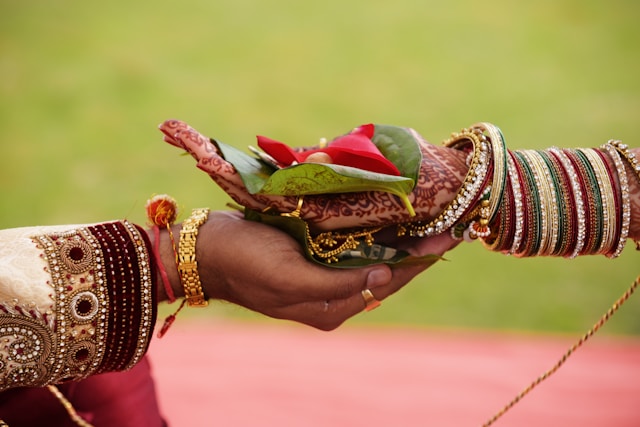
Marathi weddings follow a sequence of rituals that has stayed remarkably consistent for generations, even as the scale and setting of the events themselves have changed. For families planning a wedding — especially when one side is less familiar with Marathi customs, as happens more often now with inter-city and inter-caste matches — it helps to see the whole sequence laid out in order, from the first formal engagement to the morning after the wedding.
Sakhar Puda: The Formal Engagement
The Sakhar Puda (literally, a “packet of sugar”) is the formal engagement, usually held weeks to a few months before the wedding. Both families gather, sweets are exchanged, and the match is announced to relatives — in many families this is also when rings are exchanged. It's less elaborate than the wedding itself, but it's the point after which the match is considered settled and wedding planning formally begins.
Fixing the Muhurat
Soon after the Sakhar Puda, families consult a purohit or family astrologer to fix the vivah muhurat — the auspicious date and time for the wedding itself. This is its own detailed process; see our guide to how a Marathi wedding muhurat is chosen for how Tithi, Nakshatra and Chaturmas are factored in.
Haldi (Halad) Ceremony
A day or two before the wedding, both the bride's and groom's families separately hold a Haldi ceremony, where turmeric paste is applied to the bride and groom by family members. Turmeric is considered auspicious and purifying, and this ceremony also marks the point where the couple traditionally doesn't step outside the house until the wedding.
Mehendi
Usually held the same day or evening as the Haldi, the bride's hands and feet are decorated with henna. It's a more relaxed, celebratory event compared to the ritual-heavy ceremonies around it, and today often doubles as a get-together for close friends and cousins.
Simantapujan / Grihashanti
On the wedding day itself, before the couple leaves for the wedding venue, a short puja is performed at home — the Grihashanti or Simantapujan — seeking a smooth, obstacle-free ceremony ahead.
Wedding Day: Ganpati Puja & Devak
At the venue, the day begins with a Ganpati Puja, invoking Lord Ganesha before any major undertaking, followed by Devak — a ritual invoking the family's kuldevta (family deity) to bless the wedding.
Varat: The Groom's Procession
The groom arrives at the venue in a varat (procession), traditionally with dancing, music and family members accompanying him. At the entrance, the bride's mother performs his aukshan (a small welcoming ritual with a lit lamp) before he's led inside.
Antarpat & Mangalashtak
This is the ritual most people picture when they think of a Marathi wedding. A cloth (antarpat) is held between the bride and groom so they can't see each other, while the priest and gathered family recite Mangalashtak — auspicious verses blessing the marriage. At the final verse, the cloth is dropped, guests shower the couple with akshata (turmeric-coated rice), and the two see each other for the first time as a couple that day.
Kanyadan
The bride's father formally gives her hand to the groom, entrusting his daughter to him — one of the most emotionally significant moments of the ceremony for most families.
Saptapadi: The Seven Vows
The couple takes seven steps together around the sacred fire (Agni), each step representing a specific vow — for nourishment, strength, prosperity, happiness, progeny, health, and lifelong friendship and loyalty. In Hindu tradition, the marriage is considered complete once the Saptapadi is done.
Sindoor, Mangalsutra & Karmasampatti
The groom applies sindoor to the bride's hair parting and ties the mangalsutra around her neck — both permanent markers of her married status. A short closing ritual, Karmasampatti, formally concludes the ceremony, after which the couple receives blessings from elders.
Reception
Most families follow the ceremony with a reception, either the same evening or the next day — a more informal event where the wider social circle, colleagues and extended family who weren't part of the ritual-heavy ceremony come to congratulate the couple.
Griha Pravesh: The Day After
The bride's formal entry into her new home, usually the day after the wedding. A small puja is performed at the threshold, and in many families she kicks over a small container of rice or grain on her way in — a gesture of bringing prosperity into the household.
The exact order and inclusion of these rituals varies a fair bit by region, family tradition and how much is condensed into a single day versus spread across a longer wedding week — but this sequence, Sakhar Puda through Griha Pravesh, is the backbone most Marathi weddings are still built around today.
Frequently Asked Questions
Still looking for the right match?
MarathiVivah helps you find verified Marathi bride and groom profiles across Maharashtra — currently free.